PF 429242 S1P Receptor inhibitor Evaluation Against SFTSV Infection
Copy code to add this image to your page
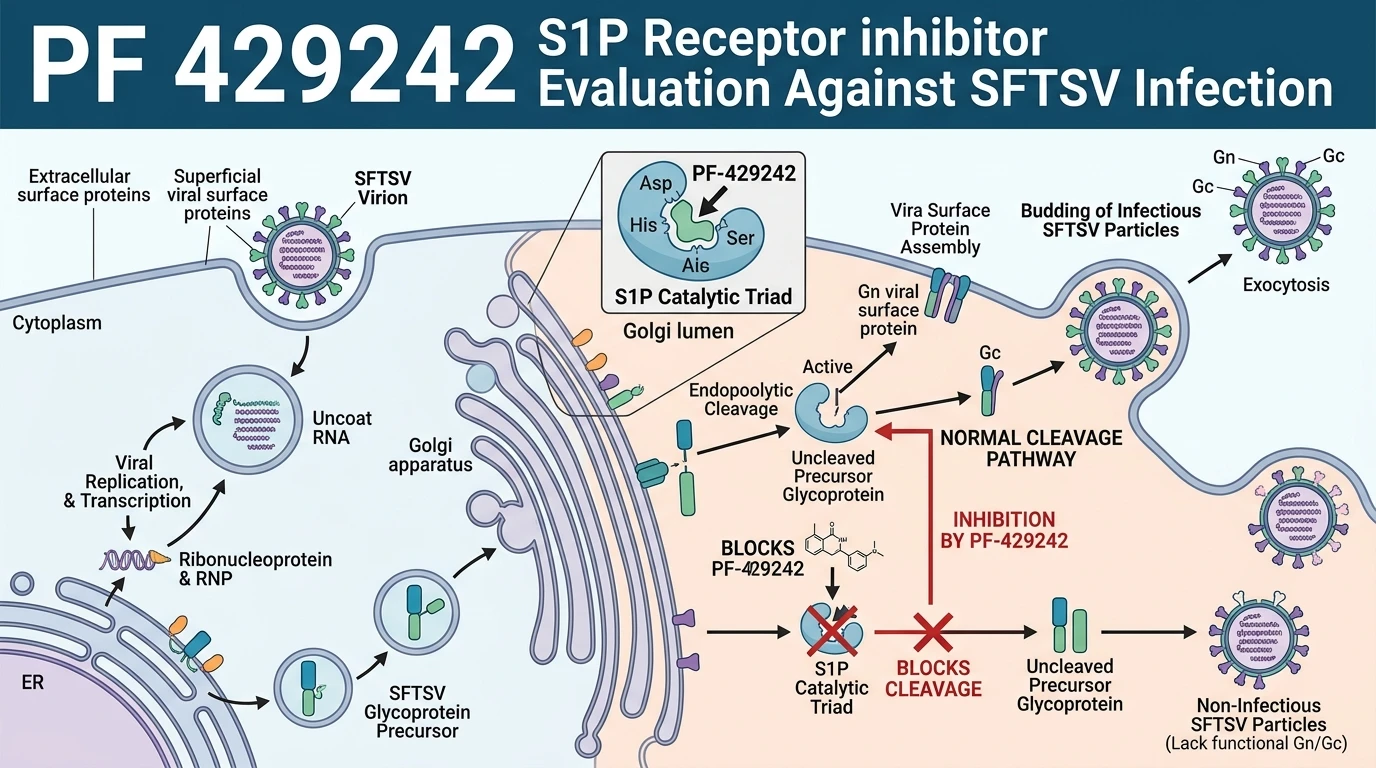
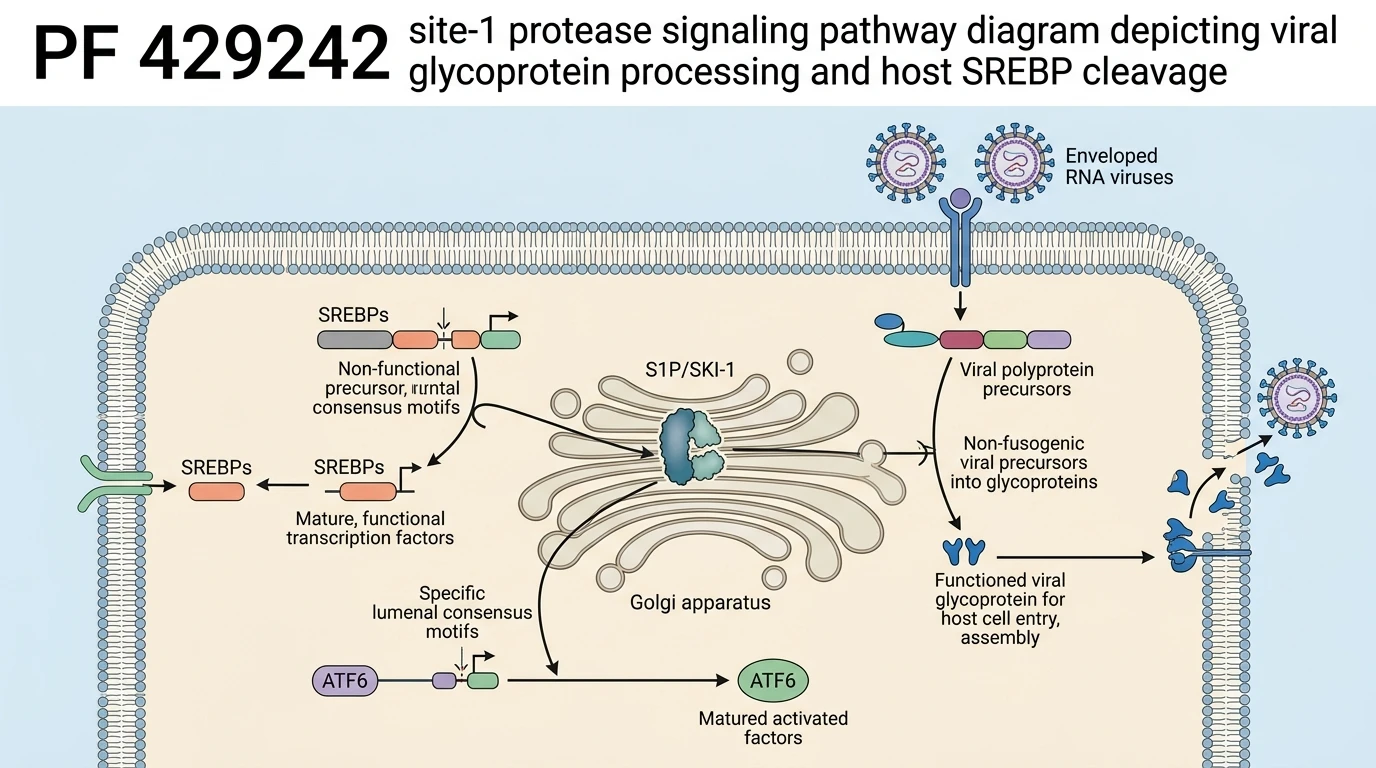
Cellular Site-1 protease (S1P), also designated as Subtilisin kexin isozyme-1 (SKI-1), is a membrane-bound proprotein convertase localized to the cis/medial-Golgi membrane. S1P performs essential endoproteolytic cleavage of host precursor proteins containing specific dibasic or hydrophobic consensus sequences. Among its major physiological substrates are sterol regulatory element-binding proteins (SREBPs) and activating transcription factor 6 (ATF6). SREBPs regulate intracellular lipid and cholesterol biosynthesis pathways. Beyond cellular lipid homeostasis, S1P plays a vital role in processing viral precursor proteins for several enveloped RNA viruses. Viral polyproteins frequently exploit host convertases to undergo post-translational maturation. Cleavage of viral envelope glycoproteins by host S1P generates mature, fusogenic complexes necessary for host receptor binding and membrane fusion. Consequently, pharmacological targeting of S1P represents a compelling host-directed antiviral approach aimed at curtailing viral infectivity without directly driving viral drug resistance mutations.
The small molecule PF-429242 is a potent, reversible, competitive inhibitor of S1P enzymatic activity. By binding to the S1P catalytic domain, PF-429242 prevents substrate cleavage within the Golgi lumen. In cell culture assays, PF-429242 demonstrates low nanomolar potency against S1P-mediated processing of viral glycoproteins, suppressing viral replication across multiple viral families. Based on these promising in vitro cellular findings, researchers evaluated PF 429242 as a potential therapeutic intervention against Severe Fever with Thrombocytopenia Syndrome Virus (SFTSV). SFTSV is an emerging tick-borne phenuivirus associated with high case-fatality rates and severe hemorrhagic symptoms. Effective therapeutic countermeasures against SFTSV remain severely limited.
To rigorously assess the in vivo therapeutic potential of PF-429242, investigators utilized an established type I interferon receptor knockout (IFNAR KO, A129) mouse model. IFNAR KO mice exhibit high susceptibility to SFTSV, mimicking fulminant human disease features. Experimental cohorts were challenged with either lethal (10^6 focus-forming units, ffu) or non-lethal (10^2 ffu) viral inocula. Therapeutic intervention was initiated using intraperitoneal administration of PF-429242 at a dosage of 1 mg/mouse. Injections were administered at 1, 24, 48, and 72 hours post-infection. Control animals received vehicle saline injections following identical administration schedules.
Experimental findings revealed that PF-429242 failed to deliver measurable therapeutic protection against SFTSV infection in vivo. In the lethal challenge group (10^6 ffu), administration of PF-429242 yielded 100% mortality. All animals succumbed to severe viral disease with kinetics indistinguishable from saline-treated control groups. Furthermore, treatment failed to mitigate severe systemic clinical signs. Acute body weight loss progressed rapidly in both treatment and control cohorts. Similarly, hypothermia and viral burden were not suppressed by the compound. Under the tested dosing regimen within this highly permissive animal model, target engagement did not translate into clinical recovery.
Despite the lack of survival benefits, the trial provided important toxicological baseline data. Intraperitoneal delivery of 1 mg/mouse PF-429242 did not induce observable compound-related adverse effects. Animals treated with the compound displayed no accelerated weight drop or enhanced mortality relative to infected control animals. Pathological analysis confirmed that S1P inhibition did not exacerbate SFTSV-induced tissue injury or inflammatory cascades. The absence of overt compound toxicity demonstrates that short-term S1P inhibition is tolerated in immunocompromised murine hosts.
Several pharmacological factors likely account for the discrepancy between in vitro efficacy and in vivo outcomes. First, the systemic half-life and tissue distribution of PF-429242 in mice may yield insufficient residence time at Golgi S1P sites. Sustained target coverage above inhibitory thresholds is crucial for host-directed antivirals. Second, the extreme virulence in IFNAR KO mice may overwhelm single-agent target inhibition. In severe viral immunopathology, host S1P blockade alone cannot overcome compromised innate immunity. Future investigations must establish clear pharmacokinetic-pharmacodynamic relationships, evaluate higher dosing schedules, and explore synergistic combination strategies with direct-acting antivirals.
In Vivo Evaluation and Pharmacological Characterization
Copy code to add this image to your page
PF-429242 functions as a reversible, competitive inhibitor of cellular Site-1 protease (S1P/SKI-1), blocking lumenal endoproteolytic processing of precursor substrates. By targeting host S1P, the compound disrupts the maturation of sterol regulatory element-binding proteins and viral envelope polyproteins required for membrane fusion. In lethal SFTSV-infected IFNAR KO mouse models, intraperitoneal treatment with PF-429242 (1 mg/mouse) failed to diminish acute hypothermia, weight loss, or lethal outcomes relative to control cohorts, indicating limited single-agent efficacy in highly vulnerable immunocompromised hosts despite lack of overt compound-induced toxicity.
Inability to Attenuate Lethal SFTSV Challenge in Vivo
PF-429242 was evaluated for therapeutic efficacy in type I interferon receptor knockout (IFNAR KO, A129) mice exposed to Severe Fever with Thrombocytopenia Syndrome Virus. Animals received 1 mg/mouse of PF-429242 intraperitoneally at 1, 24, 48, and 72 hours post-infection. Following a lethal viral challenge of 10^6 focus-forming units, the compound failed to arrest disease progression. Mortality reached 100% in both treated and saline control cohorts. Acute body weight loss remained unchanged across groups. The treatment failed to preserve systemic physiological integrity. The lack of protection highlights significant translational barriers between in vitro enzymatic inhibition and complex in vivo pathogenesis.
Safety Profile and Lack of Disease Exacerbation
Despite the absence of survival benefits, therapeutic administration of the PF 429242 S1P Receptor inhibitor displayed an acceptable safety profile in murine models. Treated animals exhibited no accelerated kinetics of hypothermia or weight loss compared to vehicle control mice. Pathological scores did not worsen under the 1 mg/mouse dosing regimen. These empirical observations confirm that S1P inhibition does not trigger acute systemic toxicity under tested conditions. The drug did not exacerbate viral pathogenesis. Further optimization of dosing frequency or combination regimens may be necessary to evaluate host-targeted antiviral interventions effectively.