Wnt/beta-catenin Inhibitors
The Wnt/beta-catenin signaling pathway, also known as the canonical Wnt pathway, is a master regulator of embryonic development, tissue regeneration, and adult stem cell homeostasis. In the absence of Wnt ligands, cytoplasmic beta-catenin is continuously degraded by a 'destruction complex' consisting of Adenomatous Polyposis Coli (APC), Axin, Glycogen Synthase Kinase 3 beta (GSK3B), and Casein Kinase 1 (CK1). When Wnt ligands bind to Frizzled receptors and LRP5/6 co-receptors, the destruction complex is inhibited, allowing beta-catenin to accumulate, translocate to the nucleus, and activate TCF/LEF-mediated transcription of genes like MYC and CCND1. Aberrant activation of this pathway, often through mutations in APC or CTNNB1 (the gene encoding beta-catenin), is a hallmark of nearly all colorectal cancers and is also prevalent in hepatocellular carcinoma, melanoma, and breast cancer. Wnt/beta-catenin inhibitors are designed to block this signaling at various levels. These are generally classified into upstream inhibitors, which target Wnt ligand secretion or receptor binding, and downstream inhibitors, which target the destruction complex or the nuclear transcriptional machinery.
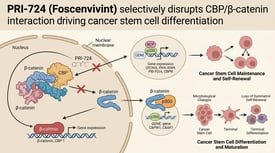
Porcupine inhibitors, such as WNT974 (LGK974), block the palmitoylation of Wnt ligands, a step essential for their secretion. Tankyrase inhibitors, like XAV939 and G007-LK, stabilize Axin, thereby promoting beta-catenin degradation. Downstream inhibitors like PRI-724 target the interaction between beta-catenin and the co-activator CBP. Despite the clear oncogenic role of Wnt signaling, clinical progress has been slow due to significant challenges. The most prominent is the 'on-target' toxicity, as Wnt signaling is essential for the maintenance of the intestinal epithelium and bone density. Clinical trials have frequently reported bone loss (osteoporosis) and gastrointestinal issues as dose-limiting toxicities.
Furthermore, the lack of traditional 'druggable' pockets on beta-catenin itself has made the development of small-molecule inhibitors difficult. Current research is exploring the use of DKK1-neutralizing antibodies and R-spondin inhibitors to modulate the pathway more subtly. Combination strategies are also being investigated, such as pairing Wnt inhibitors with immune checkpoint blockers, as Wnt activation is a known mechanism of 'cold' tumor immune evasion. Tool compounds like ICG-001 have been instrumental in defining the transcriptional role of beta-catenin. As the field moves forward, the focus is on identifying specific biomarkers to select patients who are most likely to benefit and developing tissue-specific delivery systems to minimize systemic toxicity. The development of PROTACs (Proteolysis Targeting Chimeras) to degrade beta-catenin or other pathway components represents a promising new direction.
Ultimately, successfully targeting the Wnt pathway requires a delicate balance between inhibiting tumor growth and preserving the regenerative capacity of healthy tissues.