OGT Inhibitors
O-GlcNAc Transferase (OGT) is a unique and essential enzyme that catalyzes the covalent attachment of a single N-acetylglucosamine (GlcNAc) sugar molecule to the hydroxyl groups of serine or threonine residues on nuclear, cytoplasmic, and mitochondrial proteins. This post-translational modification, known as O-GlcNAcylation, is dynamic and reversible, with the removal of the sugar moiety being performed by the enzyme O-GlcNAcase (OGA). OGT utilizes UDP-GlcNAc, the end product of the hexosamine biosynthetic pathway (HBP), as its substrate. Since the HBP integrates signals from glucose, amino acid, fatty acid, and nucleotide metabolism, OGT acts as a critical nutrient sensor, coupling the cell's metabolic status to the regulation of diverse cellular processes, including transcription, translation, signal transduction, and protein stability. Dysregulation of OGT and aberrant O-GlcNAcylation levels are associated with a wide range of human diseases. In cancer, OGT is frequently overexpressed, leading to hyper-O-GlcNAcylation of oncogenic proteins (e.g., MYC, p53, and various kinases), which promotes tumor cell proliferation, survival, and metastasis.
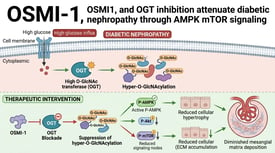
In metabolic diseases, chronically elevated O-GlcNAcylation is a key driver of insulin resistance and the complications of diabetes. Furthermore, OGT plays a complex role in neurodegenerative diseases like Alzheimer's, where the O-GlcNAcylation of tau and amyloid precursor protein (APP) competes with phosphorylation, potentially influencing the formation of toxic aggregates. Given its central role in these pathologies, OGT has become an attractive target for pharmacological intervention. Current research progress has seen the development of several generations of OGT inhibitors, although most remain in the preclinical stage. Early inhibitors were often substrate analogs with poor cell permeability and low potency. The development of OSMI-1 and later the more potent OSMI-4 represented a significant step forward, providing researchers with valuable tools to study OGT function in cell-based models.
Other compounds, such as the quinolinone-based inhibitor L01, have also shown promise in reducing O-GlcNAc levels and inhibiting cancer cell growth. Despite these advances, no OGT inhibitor has yet entered clinical trials, primarily due to challenges in achieving high potency, selectivity, and favorable pharmacokinetic properties. OGT inhibitors can be classified into several types: UDP-GlcNAc competitive inhibitors, peptide-competitive inhibitors, and allosteric inhibitors. A major challenge in targeting OGT is its essential role in normal physiology; global inhibition of OGT can be toxic, as it is required for cell viability and proper development. To address this, current research is exploring strategies for substrate-specific OGT inhibition or targeting the interaction between OGT and its specific adapter proteins. Additionally, the development of PROTACs to degrade OGT is an emerging area of interest.
Future directions include the identification of biomarkers to select patients for OGT-targeted therapy and the exploration of combination treatments, such as pairing OGT inhibitors with metabolic modulators or conventional chemotherapeutics. As the structural biology of OGT and its substrate recognition mechanisms become clearer, the development of more refined and clinically viable inhibitors is expected to accelerate.