RIP kinase Inhibitors
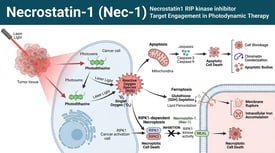
Receptor-Interacting Protein (RIP) kinase inhibitors target a family of serine/threonine kinases, most notably RIPK1 and RIPK3, which are central mediators of necroptosis—a form of regulated, pro-inflammatory cell death. The signaling pathway begins when ligands like TNF-α bind to their receptors, leading to the formation of different molecular complexes. When caspase-8 is inhibited or absent, RIPK1 recruits RIPK3 to form the "necrosome," which then phosphorylates MLKL, leading to plasma membrane rupture and the release of intracellular contents. This process is highly inflammatory and is associated with a variety of diseases, including inflammatory bowel disease (IBD), psoriasis, systemic inflammatory response syndrome (SIRS), and neurodegenerative conditions like Amyotrophic Lateral Sclerosis (ALS) and Alzheimer's disease.
RIP kinase inhibitors are classified into several types based on their binding mode and selectivity. RIPK1 inhibitors, such as the prototype Necrostatin-1 (Nec-1) and its more stable analog Nec-1s, target the kinase domain in an allosteric manner. More recently, highly potent and selective RIPK1 inhibitors like GSK'2982064 and DNL747 have entered clinical trials for both peripheral and central nervous system indications. RIPK3 inhibitors and MLKL inhibitors are also being developed to block the pathway further downstream.
The current research status shows significant progress, with several compounds in Phase I and Phase II trials demonstrating safety and target engagement. However, a major challenge in the field is the dual role of RIPK1; it can also function as a scaffold to promote cell survival via NF-κB signaling, meaning that inhibitors must specifically target its kinase activity without disrupting its scaffolding functions. Furthermore, the redundancy in cell death pathways—where cells may switch from necroptosis to apoptosis when one is blocked—suggests that combination therapies might be necessary for maximum efficacy. Toxicity is another concern, as RIP kinases play roles in normal immune homeostasis.
Despite these challenges, the ability to specifically block necroptosis without affecting apoptosis offers a powerful therapeutic strategy for treating chronic inflammatory and degenerative diseases where cell loss and inflammation are the primary drivers of pathology. As clinical data continues to emerge, RIP kinase inhibitors remain one of the most watched classes of drugs in the field of cell death and inflammation.