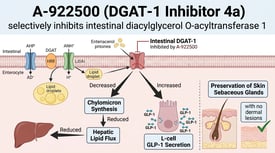
Acyltransferase Inhibitors
Acyltransferases are enzymes that catalyze the transfer of an acyl group, typically from an acyl-CoA or acyl-glycerol derivative, to a specific acceptor molecule, most commonly an alcohol or amine. This reaction is fundamental to numerous metabolic pathways, including the synthesis of lipids, phospholipids, sphingolipids, and the post-translational modification of proteins (e.g., N-terminal acetylation, O-GlcNAcylation). Different classes of acyltransferases exist, distinguished by their substrates and the type of molecule they acylate. For example, phospholipid acyltransferases are involved in membrane lipid synthesis, while protein acetyltransferases (e.g., HATs) modify proteins. The specific signaling pathways influenced by acyltransferases are diverse and depend on the nature of the acylated molecule. Dysregulation of Acyltransferase activity is implicated in a wide range of diseases. In lipid metabolism, aberrant Acyltransferase function can contribute to obesity, metabolic syndrome, and cardiovascular diseases by altering triglyceride and cholesterol levels. In cancer, certain acyltransferases are overexpressed and promote tumor growth, survival, and metastasis by influencing membrane composition, lipid signaling, or protein function. For instance, enzymes involved in phospholipid synthesis can support rapid cell proliferation, while protein acetyltransferases can regulate the activity of oncogenic transcription factors or tumor suppressors.
Neurodegenerative diseases, such as Alzheimer's and Parkinson's, have also been linked to altered lipid metabolism and protein acylation. Inflammatory processes and immune responses can also be modulated by acyltransferase activity. Current research on acyltransferase inhibitors is highly varied, reflecting the diverse roles of these enzymes. Inhibitors are being developed for specific acyltransferases implicated in disease. For example, inhibitors of enzymes involved in triglyceride synthesis are explored for metabolic disorders, while inhibitors of protein acetyltransferases are investigated as anti-cancer agents. Preclinical studies have shown promising results in various disease models, demonstrating the potential of acyltransferase inhibition to modulate disease progression. However, the development of clinically approved acyltransferase inhibitors is still in its early stages for many targets. Some protein acetyltransferase inhibitors have progressed to early-phase clinical trials for hematological malignancies and solid tumors. Acyltransferase inhibitors can be classified based on the specific enzyme they target (e.g., HAT inhibitors, OGT inhibitors for O-GlcNAcylation) or by their mechanism of action.
They can be competitive inhibitors that bind to the active site, preventing substrate binding, or non-competitive inhibitors. Inhibitors can also be classified by their chemical structure, with various scaffolds being explored. For protein acetyltransferases, inhibitors often target the acetyl-CoA binding site. For lipid-modifying acyltransferases, inhibitors might target acyl-CoA binding or the acyl-acceptor binding site. Research tool compounds are crucial for dissecting the roles of specific acyltransferases. Key challenges in developing acyltransferase inhibitors include achieving high selectivity, as many acyltransferases share conserved active site features. Off-target inhibition can lead to significant toxicities, particularly concerning lipid metabolism or essential protein modifications. Developing inhibitors that can effectively penetrate target tissues (e.g., the brain for neurodegenerative diseases) is also a challenge. Resistance mechanisms can emerge through compensatory pathways.
Combination therapy strategies are being investigated, such as combining acyltransferase inhibitors with chemotherapy or other targeted agents to enhance anti-cancer efficacy or to manage metabolic dysregulation. A deeper understanding of the specific acyltransferases driving disease pathogenesis and their unique substrate specificities is essential for the rational design of effective and safe acyltransferase inhibitors.