ROCK Inhibitors
Rho-associated coiled-coil containing protein kinase (ROCK) inhibitors are a class of compounds that target the ROCK1 and ROCK2 isoforms, which are key downstream effectors of the small GTPase RhoA. These kinases play a fundamental role in regulating the actin cytoskeleton, influencing cellular processes such as contraction, motility, morphology, and proliferation. The signaling pathway involves the activation of ROCK by GTP-bound Rho, which then phosphorylates various substrates, including the myosin light chain (MLC) and the myosin-binding subunit of MLC phosphatase. This leads to increased actomyosin contractility and the formation of stress fibers. ROCK inhibitors have gained significant attention for their therapeutic potential in a wide range of conditions, most notably in ophthalmology, cardiovascular diseases, and fibrotic disorders.
In the context of glaucoma, ROCK inhibitors like Netarsudil (Rhopressa) have been approved by the FDA. They work by increasing aqueous humor outflow through the trabecular meshwork, thereby reducing intraocular pressure. In the cardiovascular realm, Fasudil, a non-selective ROCK inhibitor, has been used in Japan for the treatment of cerebral vasospasm following subarachnoid hemorrhage and is being investigated for pulmonary hypertension. Beyond these applications, ROCK inhibitors are being explored for their neuroprotective and regenerative properties in neurological conditions such as spinal cord injury, Alzheimer's disease, and multiple sclerosis, where they may promote axonal growth and reduce neuroinflammation. Inhibitors are generally classified into two types: Type I inhibitors, which are ATP-competitive and bind to the active conformation of the kinase, and Type II inhibitors, which bind to the inactive conformation.
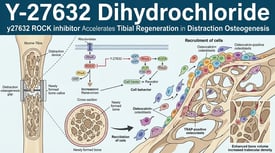
While many current inhibitors show limited selectivity between ROCK1 and ROCK2 due to the high homology of their kinase domains, research is ongoing to develop isoform-specific agents to minimize systemic side effects. One of the primary challenges in the systemic administration of ROCK inhibitors is the risk of hypotension, as ROCK plays a critical role in maintaining vascular tone. Consequently, many research efforts are focused on local delivery methods or the development of soft drugs that are rapidly metabolized after exerting their effect. In the laboratory, Y-27632 is a widely used tool compound that has provided invaluable insights into the role of ROCK in cell biology and stem cell research, particularly in improving the survival of dissociated human embryonic stem cells. As the field progresses, the development of more selective inhibitors and the exploration of combination therapies, such as pairing ROCK inhibitors with anti-fibrotic or anti-angiogenic agents, hold the promise of expanding the clinical utility of this versatile class of drugs across multiple therapeutic areas.