Survivin Inhibitors
Survivin, a unique member of the inhibitor of apoptosis protein (IAP) family, stands out due to its dual roles in both apoptosis inhibition and cell division. It is an essential protein for embryonic development but is largely absent or expressed at very low levels in most terminally differentiated adult tissues. However, Survivin is highly expressed in the vast majority of human cancers, making it an attractive and highly selective therapeutic target. Mechanistically, survivin inhibits apoptosis through several pathways. It can directly bind to and inhibit effector caspases (caspase-3, -7), preventing their activation and the subsequent execution of programmed cell death. Additionally, survivin can interfere with the intrinsic apoptotic pathway by modulating mitochondrial function and interacting with other pro-apoptotic proteins. Beyond its anti-apoptotic functions, survivin plays a crucial role during mitosis.
It localizes to the centromeres and the mitotic spindle, where it is involved in spindle checkpoint function, chromosome segregation, and cytokinesis. Its overexpression in cancer cells contributes significantly to their survival, uncontrolled proliferation, and resistance to various conventional anticancer therapies. Given its widespread overexpression in malignancies and its critical role in tumor cell survival and proliferation, survivin is implicated in a broad spectrum of cancers. These include, but are not limited to, lung cancer, breast cancer, colorectal cancer, prostate cancer, ovarian cancer, pancreatic cancer, glioblastoma, and various hematological malignancies such as leukemia and lymphoma. Its high expression in cancer cells and low expression in normal adult tissues provides a favorable therapeutic window, minimizing potential off-target toxicities. Research into survivin inhibitors has progressed through various stages of preclinical and clinical development. One of the most prominent approaches involves antisense oligonucleotides or small molecules that suppress survivin expression.
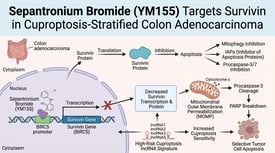
YM155 (sepantronium bromide), a small molecule survivin suppressant, inhibits survivin transcription and has been extensively evaluated in multiple clinical trials for various solid tumors (e.g., non-small cell lung cancer, melanoma) and lymphomas. While YM155 has shown some promising results, particularly in combination with chemotherapy, it has not yet achieved broad regulatory approval. Other strategies include the development of small molecule inhibitors that directly disrupt survivin's protein-protein interactions (e.g., with caspases or mitotic proteins), compounds that promote survivin degradation, and immunotherapeutic approaches such as survivin-based vaccines. Many of these agents are currently in preclinical studies or early-phase clinical trials. Survivin inhibitors can be broadly classified based on their mechanism: (1) Transcriptional inhibitors (e.g., YM155) that reduce survivin mRNA and protein levels; (2) direct protein-protein interaction inhibitors that disrupt survivin's binding to its partners (e.g., caspases, tubulin); (3) degradation enhancers that promote proteasomal breakdown of survivin; and (4) immunotherapeutic agents like survivin-derived peptide vaccines. Key research tool compounds include various small molecule inhibitors and genetic constructs for survivin knockdown. Challenges in developing survivin inhibitors include achieving optimal tumor penetration, ensuring sufficient potency, and identifying reliable predictive biomarkers for patient response.
Due to survivin's multifaceted roles, combination therapies with conventional chemotherapy, radiation, or other targeted agents are a common and promising strategy to enhance anti-tumor efficacy, overcome resistance, and achieve more durable responses, leveraging the synergistic effects of targeting both apoptosis and mitosis.