TAK1 Inhibitors
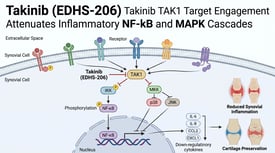
Transforming growth factor-beta-activated kinase 1 (TAK1), also known as MAP3K7, is a pivotal serine/threonine kinase that functions as a central hub in the signaling pathways of the innate and adaptive immune systems. It is activated by a variety of stimuli, including cytokines like tumor necrosis factor-alpha (TNF-alpha) and interleukin-1 (IL-1), as well as ligands for Toll-like receptors (TLRs) and B-cell/T-cell receptors. Upon activation, TAK1 forms a complex with its regulatory subunits, TAB1 and TAB2 or TAB3, which facilitates its autophosphorylation. Once active, TAK1 triggers two major downstream signaling cascades: the nuclear factor-kappa B (NF-kB) pathway and the mitogen-activated protein kinase (MAPK) pathways, including c-Jun N-terminal kinase (JNK) and p38. These pathways are essential for the production of pro-inflammatory cytokines and the regulation of cell survival, differentiation, and apoptosis. Given its central role, dysregulation of TAK1 is associated with various pathological conditions, including chronic inflammatory diseases like rheumatoid arthritis, inflammatory bowel disease, and several types of cancer, particularly those driven by KRAS mutations or those exhibiting constitutive NF-kB activation.
In the context of oncology, TAK1 has emerged as a promising therapeutic target because it mediates survival signals that allow cancer cells to resist chemotherapy and radiation. Inhibiting TAK1 can sensitize tumor cells to apoptosis-inducing agents. Current research into TAK1 inhibitors has led to the identification of several small-molecule compounds. The most widely used research tool is 5Z-7-oxozeaenol, a fungal metabolite that acts as a potent and selective irreversible inhibitor of TAK1. However, its clinical utility is limited by poor metabolic stability. Other inhibitors like NG25 and takinib have been developed to improve selectivity and potency.
Takinib, in particular, is a selective, ATP-competitive inhibitor that has shown efficacy in preclinical models of rheumatoid arthritis and certain cancers. Despite the therapeutic potential, the development of TAK1 inhibitors faces significant challenges, primarily regarding systemic toxicity. Since TAK1 is essential for the survival of many normal cell types, including hepatocytes and intestinal epithelial cells, global inhibition can lead to severe adverse effects such as tissue damage and inflammation. Recent studies have also highlighted the role of TAK1 in regulating necroptosis, a form of programmed cell death, by modulating the activity of RIPK1. This discovery expands the potential application of TAK1 inhibitors to include ischemia-reperfusion injury and other necrotic diseases. Current strategies to overcome these hurdles include the development of PROTACs for targeted degradation or the use of antibody-drug conjugates to deliver TAK1 inhibitors specifically to tumor cells.
Clinical progress remains in the early stages, with most compounds currently undergoing rigorous preclinical evaluation to optimize their safety profiles before advancing to human trials. The classification of these inhibitors generally falls into reversible ATP-competitive inhibitors and irreversible covalent inhibitors, with ongoing efforts focused on achieving isoform specificity and tissue-targeted delivery to mitigate the risks associated with systemic TAK1 blockade.