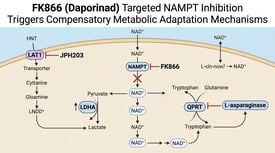
NAMPT Inhibitors
Nicotinamide phosphoribosyltransferase (NAMPT) is the rate-limiting enzyme in the nicotinamide adenine dinucleotide (NAD+) salvage pathway, converting nicotinamide to nicotinamide mononucleotide (NMN). NAD+ is a vital coenzyme involved in redox reactions and serves as a substrate for enzymes like PARPs and sirtuins, which regulate DNA repair and gene expression. Cancer cells often exhibit a high demand for NAD+ to support rapid proliferation and metabolic reprogramming, making NAMPT an attractive therapeutic target. By inhibiting NAMPT, intracellular NAD+ levels are depleted, leading to ATP exhaustion, inhibition of glycolysis, and eventually, cell death via apoptosis or autophagy. NAMPT inhibitors have been primarily investigated for their potential in treating various cancers, including hematological malignancies like leukemia and lymphoma, as well as solid tumors such as breast, lung, and colorectal cancers. Additionally, NAMPT (also known as visfatin) acts as a pro-inflammatory adipokine, suggesting that its inhibition could be beneficial in inflammatory and autoimmune diseases like rheumatoid arthritis and inflammatory bowel disease.
The development of NAMPT inhibitors has faced significant hurdles. Early candidates like FK866 (daporinad) and CHS-828 (gimeracil) showed potent preclinical activity but failed in clinical trials due to dose-limiting toxicities, most notably thrombocytopenia and gastrointestinal distress. Current research is focused on improving the therapeutic window through several strategies. One approach involves the use of antibody-drug conjugates (ADCs) to deliver NAMPT inhibitors specifically to tumor cells. Another strategy involves identifying biomarkers of sensitivity, such as the deficiency of nicotinic acid phosphoribosyltransferase (NAPRT), an enzyme in an alternative NAD+ synthesis pathway. Cells lacking NAPRT are more susceptible to NAMPT inhibition, whereas NAPRT-positive cells can be rescued by nicotinic acid.
Inhibitors are generally classified into competitive and non-competitive types based on their binding to the NAMPT enzyme. Chemically, many are small molecules containing a pyridine or similar nitrogen-containing heterocycle that mimics the nicotinamide substrate. Recent advancements include the development of dual-target inhibitors and PROTACs (Proteolysis Targeting Chimeras) that degrade the NAMPT protein rather than just inhibiting its activity. A major challenge in NAMPT inhibitor therapy is the systemic toxicity resulting from NAD+ depletion in healthy tissues. Combination therapies are being explored to enhance efficacy, such as pairing NAMPT inhibitors with PARP inhibitors to synergistically deplete NAD+ and impair DNA repair. Furthermore, understanding the role of extracellular NAMPT (eNAMPT) in the tumor microenvironment is an active area of study, as it may contribute to immune evasion and angiogenesis.
Despite the setbacks of first-generation inhibitors, the refined understanding of NAD+ metabolism and the implementation of precision medicine approaches continue to drive interest in NAMPT as a viable pharmacological target in oncology and beyond.