Chk Inhibitors
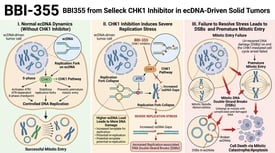
Checkpoint kinase (Chk) inhibitors represent a sophisticated class of therapeutic agents designed to disrupt the DNA damage response (DDR) network, which is frequently exploited by neoplastic cells to maintain genomic integrity despite high levels of replication stress. The primary targets in this category are Chk1 and Chk2, serine/threonine kinases that function as essential transducers in the signaling cascades initiated by the Ataxia Telangiectasia and Rad3-related (ATR) and Ataxia Telangiectasia Mutated (ATM) kinases, respectively. Chk1 is predominantly activated in response to single-stranded DNA breaks and stalled replication forks, where it phosphorylates the Cdc25 family of phosphatases. This action prevents the dephosphorylation and subsequent activation of Cyclin-Dependent Kinases (CDKs), effectively halting the cell cycle at the S or G2/M phases to allow for DNA repair. In contrast, Chk2 is primarily triggered by double-strand breaks via the ATM pathway and contributes to G1 arrest through p53 stabilization.
The therapeutic rationale for Chk inhibition often hinges on the concept of potentiating the cytotoxicity of DNA-damaging chemotherapy or radiotherapy. Furthermore, in p53-deficient tumors, which lack a functional G1 checkpoint, the inhibition of Chk1 can lead to premature mitotic entry with unrepaired DNA damage, resulting in mitotic catastrophe and apoptosis—a phenomenon often described as synthetic lethality. Currently, several Chk inhibitors are undergoing clinical evaluation. Prexasertib (LY2606368) is a potent, ATP-competitive inhibitor of both Chk1 and Chk2 that has shown promising activity in Phase II trials for high-grade serous ovarian cancer and other solid tumors. Other notable compounds include Berzosertib (M6620) and SRA737.
These inhibitors are generally classified into Chk1-selective, Chk2-selective, or dual Chk1/2 inhibitors based on their binding affinity and structural scaffolds. Research tool compounds like UCN-01, a staurosporine derivative, provided early proof-of-concept but were limited by poor selectivity and extensive protein binding. Modern inhibitors are designed with higher specificity to mitigate off-target effects. Despite their potential, the clinical development of Chk inhibitors faces significant hurdles, including dose-limiting toxicities such as neutropenia and thrombocytopenia, which are often exacerbated when combined with systemic chemotherapy. Additionally, the identification of robust predictive biomarkers remains a priority; while p53 mutation status is a common selection criterion, it does not always correlate with clinical response.
Emerging strategies focus on combining Chk inhibitors with other DDR inhibitors, such as PARP or Wee1 inhibitors, to maximize the exhaustion of repair pathways. As the field moves forward, the transition from broad-spectrum combinations to more personalized, biomarker-driven applications will be crucial for the successful integration of Chk inhibitors into the standard oncological pharmacopeia, potentially offering new hope for patients with refractory or genetically unstable malignancies.