Wee1 Inhibitors
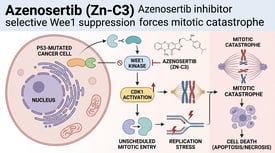
Wee1 inhibitors represent a promising class of anti-cancer agents that target the Wee1 kinase, a pivotal regulator of the cell cycle. Wee1 is a serine/threonine kinase that acts as a key component of the G2/M checkpoint, ensuring genomic integrity before cell division. Its primary mechanism of action involves phosphorylating cyclin-dependent kinase 1 (CDK1) at tyrosine 15 (Tyr15), which inactivates CDK1 and prevents premature entry into mitosis. This allows cells sufficient time to repair any DNA damage incurred during replication. In many cancer cells, other critical DNA damage response pathways, such as those involving p53, ATM, or ATR, are often compromised. This renders these cancer cells uniquely reliant on the Wee1-mediated G2/M checkpoint for survival, a phenomenon known as synthetic lethality. By inhibiting Wee1, these cancer cells are forced into mitosis prematurely, despite carrying unrepaired DNA damage.
This leads to mitotic catastrophe, genomic instability, and ultimately, apoptotic cell death. This selective vulnerability makes Wee1 an attractive target for cancer therapy, particularly in tumors with existing defects in DNA damage repair. While no Wee1 inhibitor has yet received regulatory approval, several compounds are in various stages of clinical development, predominantly for solid tumors and hematological malignancies. Adavosertib (AZD1775) is the most advanced Wee1 inhibitor, having progressed into Phase II and III clinical trials for a range of cancers, including ovarian, gastric, pancreatic, and glioblastoma. It is almost exclusively investigated in combination with DNA-damaging agents, such as chemotherapy (e.g., gemcitabine, carboplatin, irinotecan) or radiotherapy, as this synergistic approach significantly enhances anti-tumor efficacy. Other inhibitors like ZN-c3 and Debio 0123 are also undergoing clinical evaluation. Preclinical research continues to explore optimal combination strategies, identify predictive biomarkers for patient stratification (e.g., p53 mutation status, ATM/ATR pathway integrity), and elucidate mechanisms of resistance.
Wee1 inhibitors are typically small molecule, ATP-competitive inhibitors, designed for selectivity against Wee1 over other kinases to minimize off-target effects. However, common toxicities include myelosuppression (neutropenia, thrombocytopenia), fatigue, and gastrointestinal disturbances, which can be exacerbated when combined with cytotoxic chemotherapy. Understanding and managing these side effects is crucial for successful clinical translation. Resistance mechanisms are under active investigation and may involve upregulation of alternative checkpoint pathways or drug efflux pumps. The therapeutic strategy for Wee1 inhibitors is firmly rooted in the concept of synthetic lethality, leveraging the inherent vulnerabilities of cancer cells with compromised DNA repair. The goal is to push these cells past their breaking point, leading to their selective demise while sparing healthy cells. Continued research into patient selection biomarkers and optimized combination regimens holds the key to realizing the full therapeutic potential of Wee1 inhibitors in oncology.