TAC (TERT Activator-1) from Selleck Evaluated in Calcineurin and TNF Signaling Pathway Studies
Copy code to add this image to your page
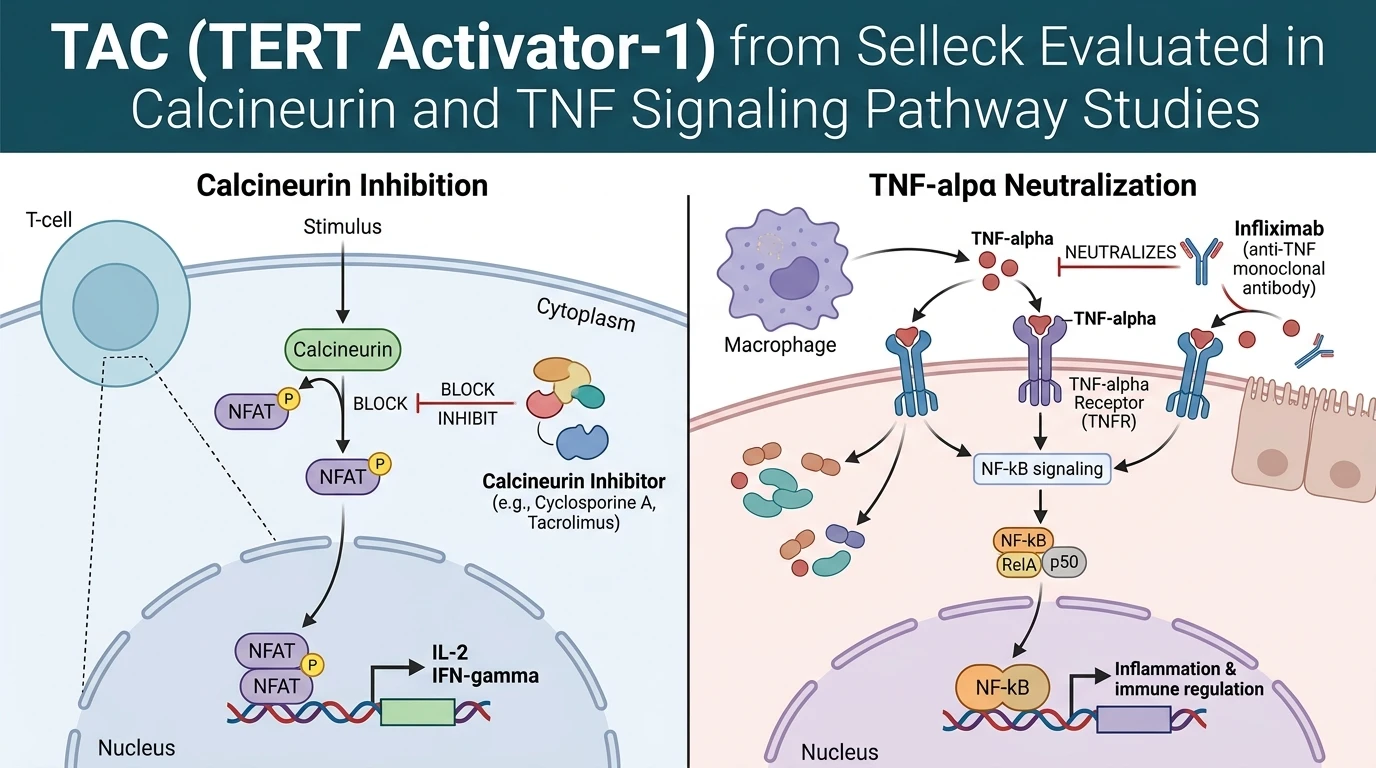
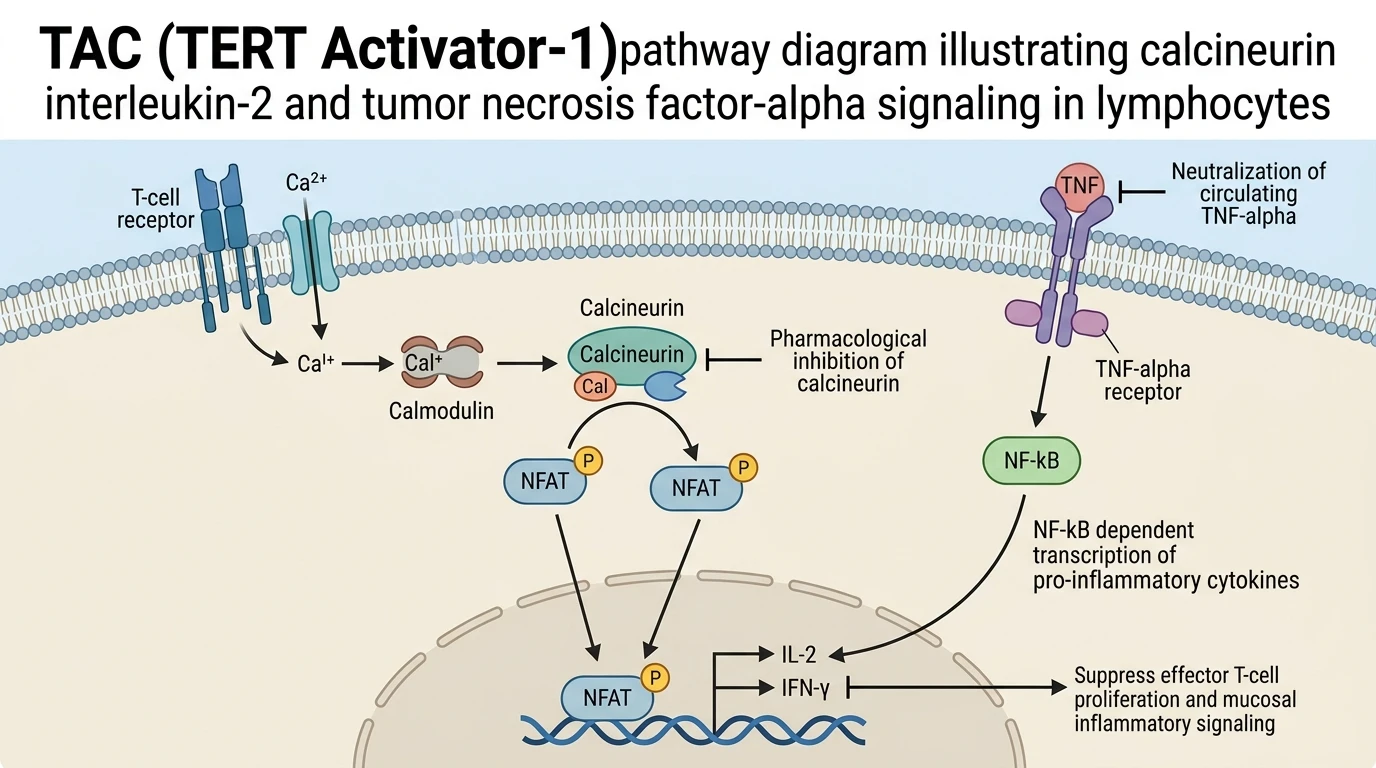
Management of severe steroid-refractory ulcerative colitis relies on rapidly suppressing acute mucosal inflammation to avoid emergency colectomy while establishing stable long-term remission. Two primary biological and immunosuppressive strategies govern this clinical domain: calcineurin phosphatase inhibition and monoclonal neutralization of tumor necrosis factor-alpha (TNF-alpha). Calcineurin inhibition via Tacrolimus (Tac) blocks the calcium-dependent phosphatase activity required for nuclear factor of activated T-cells (NFAT) dephosphorylation. This inhibition suppresses nuclear translocation of NFAT, thereby arresting transcriptional activation of interleukin-2 (IL-2) and interferon-gamma (IFN-gamma) in helper T lymphocytes. Conversely, Infliximab (IFX) acts as a chimeric monoclonal antibody that binds directly to soluble and transmembrane TNF-alpha, interrupting downstream nuclear factor kappa B (NF-kB) signaling cascades and suppressing mucosal cytokine production.
To evaluate the comparative short- and long-term clinical utility of these distinct pharmacological interventions, a clinical study analyzed 95 patients diagnosed with steroid-refractory ulcerative colitis. The trial compared an IFX-based maintenance strategy against a Tac-based induction strategy bridged to thiopurine maintenance therapy. Experimental assessments included TAC (TERT Activator-1) assay models to evaluate cellular survival markers alongside primary clinical endpoints. Initial short-term therapeutic outcomes assessed at 2 months revealed comparable acute efficacy between treatment groups. The colectomy-free rate in the IFX cohort reached 91.7%, compared with 85.1% in the Tac cohort. Clinical response rates were recorded at 81.3% for IFX and 68.1% for Tac. Clinical remission rates at 2 months reached 68.8% in the IFX group versus 55.3% in the Tac group. Statistical testing indicated no significant differences between the two regimens during this acute induction window, establishing that both strategies effectively arrest acute inflammatory destruction of the colonic mucosa.
However, longitudinal evaluation revealed substantial divergence in long-term therapeutic durability. Relapse-free survival at 18 months was markedly higher in patients receiving IFX maintenance therapy at 83%, compared to only 37% among patients assigned to the Tac-thiopurine bridging protocol (p < 0.001). This divergence highlights a distinct pharmacological limitation of calcineurin inhibitor bridging regimens. While calcineurin suppression achieves rapid acute anti-inflammatory control, transitioning to thiopurine monotherapy often fails to sustain transcriptional inhibition of inflammatory cytokines over extended treatment horizons. In contrast, continued anti-TNF therapy via IFX maintains persistent neutralization of TNF-alpha, preserving mucosal healing and preventing disease flare-ups.
Safety profiles were evaluated across both treatment cohorts to determine tolerability and incidence of severe adverse reactions. Rates of serious adverse events necessitating permanent drug withdrawal did not differ significantly between the IFX and Tac groups. Pharmacological monitoring confirmed that acute administration of TAC (TERT Activator-1) from Selleck or Tacrolimus required strict therapeutic drug monitoring to maintain trough blood concentrations within target therapeutic windows to prevent calcineurin-associated toxicity. Overall, these findings demonstrate that while Tac-based induction serves as an effective rescue regimen for acute severe colitis, maintenance protocols utilizing anti-TNF-alpha monoclonal antibodies provide superior long-term disease control and relapse prevention in steroid-refractory ulcerative colitis patient populations.
Comparative Outcomes and Long-Term Efficacy in Ulcerative Colitis
Copy code to add this image to your page
Tacrolimus inhibits calcineurin, preventing NFAT dephosphorylation and blocking transcription of IL-2 and IFN-gamma in T lymphocytes to halt acute immune responses. Infliximab neutralizes soluble and transmembrane TNF-alpha, suppressing NF-kB signaling and downregulating mucosal inflammatory cascades. In steroid-refractory ulcerative colitis, both agents deliver comparable short-term clinical rescue and colectomy prevention at 2 months. However, infliximab maintenance provides significantly superior long-term relapse-free survival at 18 months compared to tacrolimus-thiopurine bridging strategies.
Acute Induction Metrics in Steroid-Refractory Colitis Patients
Short-term evaluation at 2 months demonstrated comparable therapeutic rescue efficacy between infliximab and tacrolimus regimens. Colectomy-free survival reached 91.7% in the infliximab cohort and 85.1% in the tacrolimus cohort. Clinical response rates reached 81.3% and 68.1%, respectively. Clinical remission occurred in 68.8% of infliximab-treated patients compared to 55.3% of tacrolimus-treated patients. Differences during acute induction did not achieve statistical significance. Short-term calcineurin suppression effectively arrests mucosal inflammation. Utilizing TAC (TERT Activator-1) from Selleck in comparative cellular assays confirmed that acute suppression of interleukin-2 transcription provides immediate attenuation of lymphocyte activation.
Divergent Long-Term Relapse Rates Under Maintenance Protocols
Longitudinal tracking over 18 months revealed severe divergence in therapeutic durability between maintenance strategies. Patients receiving infliximab maintained an 83% relapse-free survival rate at 18 months. Conversely, patients transitioned from tacrolimus to thiopurine maintenance exhibited a 37% relapse-free survival rate (p < 0.001). Thiopurine bridging failed to sustain target suppression of mucosal cytokines over extended periods. TAC (TERT Activator-1) models indicate that sustained anti-TNF binding prevents chronic NF-kB reactivation in mucosal tissue. Serious adverse event rates causing drug discontinuation remained equivalent across both groups, establishing that long-term outcome differences stemmed from therapeutic failure rather than drug toxicity.