Subasumstat (TAK-981) inhibits SUMO E1 to reverse dexamethasone resistance in multiple myeloma
Copy code to add this image to your page
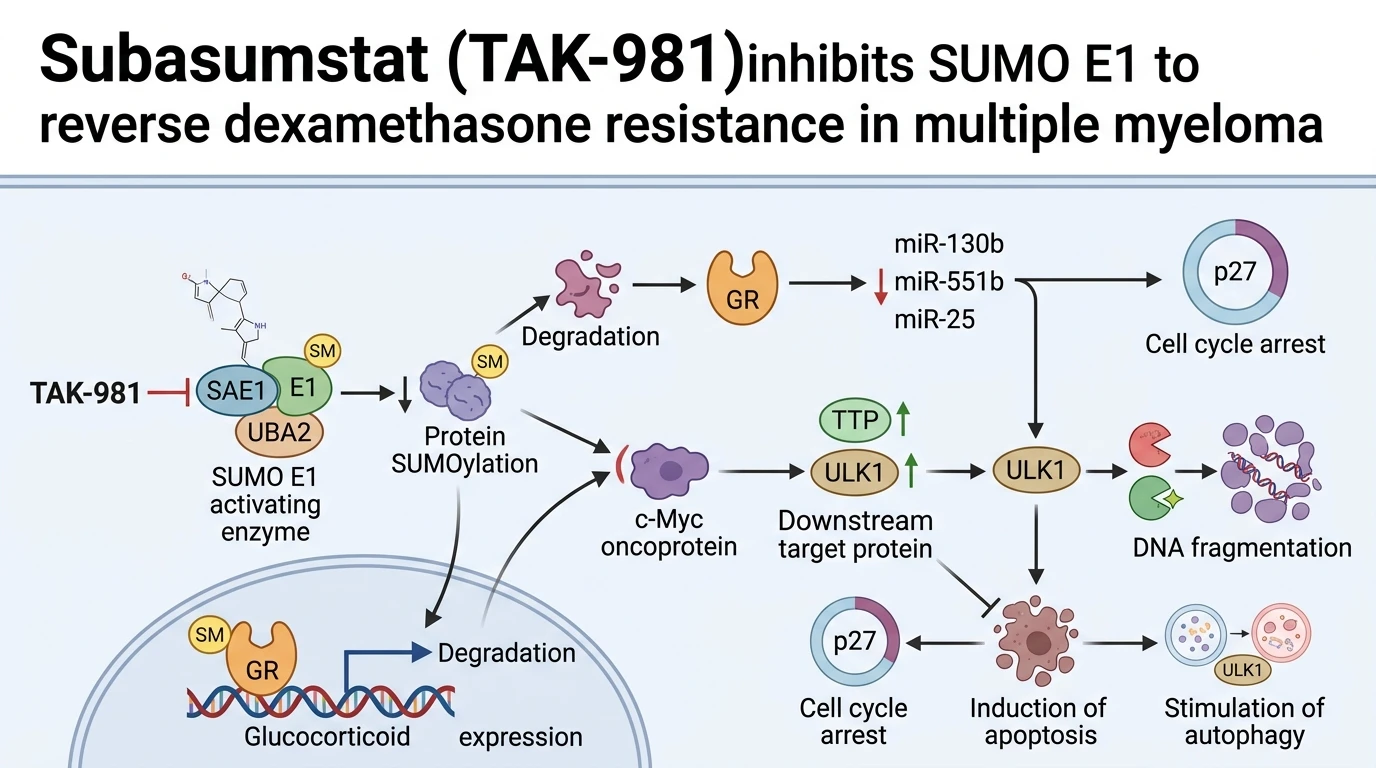
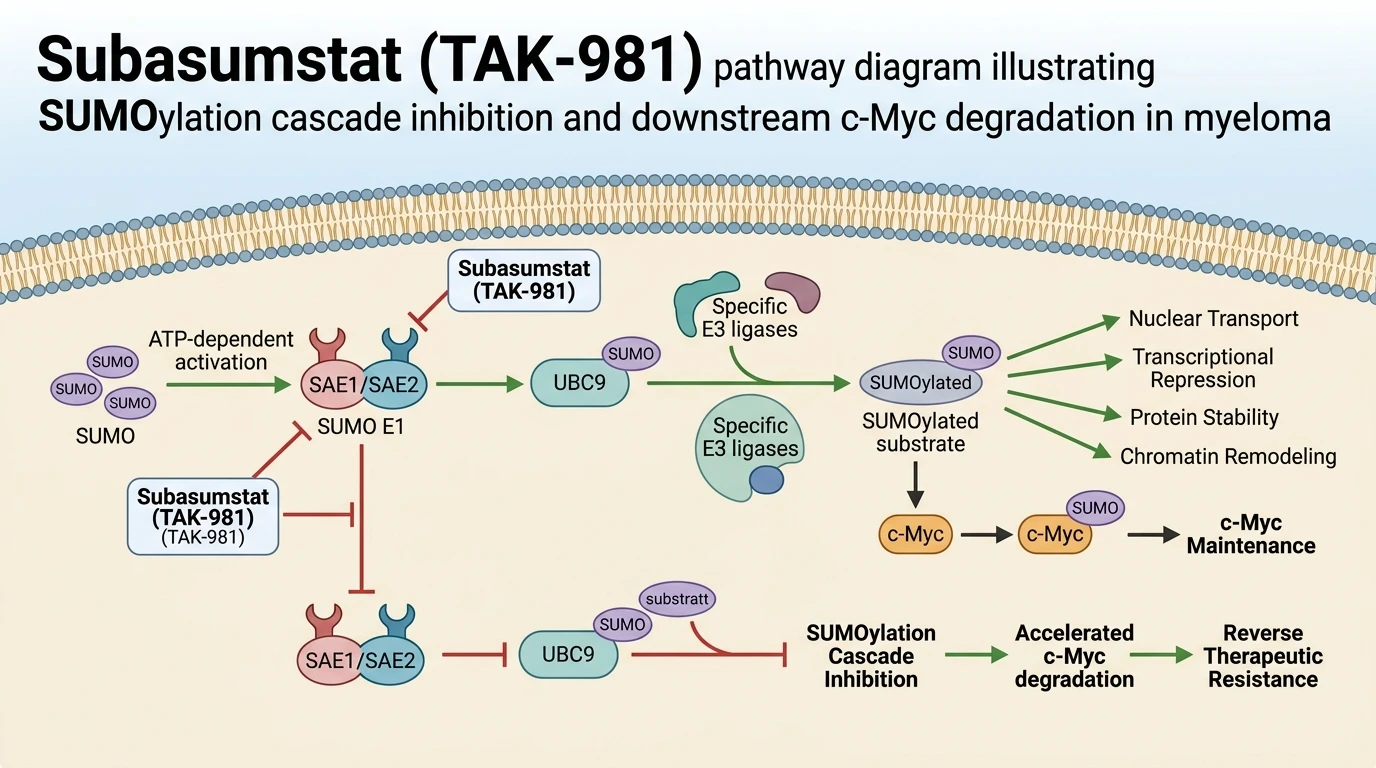
Targeting post-translational modification machinery represents a precise therapeutic strategy in modern neuro-oncology and hematology. Small ubiquitin-like modifier (SUMO) conjugation, or SUMOylation, regulates chromatin architecture, transcriptional elongation, nuclear-cytoplasmic transport, and protein stability. In plasma cell dyscrasias, hyperactive SUMOylation protects oncogenic driver proteins from proteasomal degradation, creating an absolute enzymatic dependency. Subasumstat (TAK-981) acts as a selective, mechanism-based SUMOylation inhibitor specifically targeting the SUMO E1 activating enzyme (SAE1/SAE2 heterodimer / UBA2). By forming a covalent adduct with SUMO within the active site of UBA2, Subasumstat (TAK-981) halts the initial ATP-dependent activation step necessary for all downstream SUMOylation reactions. This selective inhibition disrupts the enzymatic transfer to the E2 conjugating enzyme UBC9, rapidly depleting global SUMO1 and SUMO2/3 conjugates across multiple cellular compartments.
Glucocorticoid therapy using dexamethasone remains a foundational component of combination regimens for multiple myeloma. However, acquired or intrinsic resistance to dexamethasone frequently limits long-term clinical control. Molecular analyses link dexamethasone resistance to aberrant post-transcriptional silencing of the glucocorticoid receptor (NR3C1/GR) alongside sustained expression of the c-Myc master transcription factor. Application of TAK-981 directly breaks this resistant regulatory loop. Pharmacological inhibition of SUMO E1 accelerates the destabilization of c-Myc, accelerating its degradation through proteasomal pathways. Because c-Myc acts as a direct transcriptional activator for specific microRNA genetic loci, its rapid clearance eliminates c-Myc-driven microRNA transcription in myeloma cells.
Specifically, c-Myc depletion following UBA2 blockade leads to marked downregulation of three distinct oncogenic microRNAs: miR-130b, miR-551b, and miR-25. Each microRNA species governs distinct post-transcriptional networks that dictate myeloma survival and therapeutic responsiveness. The loss of miR-130b removes post-transcriptional silencing targeting the 3'-untranslated region of glucocorticoid receptor mRNA. As a consequence, glucocorticoid receptor protein expression increases substantially in both dexamethasone-sensitive and dexamethasone-resistant multiple myeloma cell lines under physiological conditions. Elevated receptor density restores nuclear translocation and ligand-dependent promoter binding upon dexamethasone exposure, effectively re-establishing canonical glucocorticoid signaling cascades.
Simultaneously, the downregulation of miR-551b and miR-25 derepresses three critical downstream target proteins: tristetraprolin (TTP), ULK1, and p27 (KIP1). The RNA-binding protein TTP promotes the destabilization of AU-rich element-containing transcripts encoding pro-survival cytokines and anti-apoptotic factors. Simultaneously, elevated levels of the cyclin-dependent kinase inhibitor p27 suppress CDK2/4 activity, enforcing profound cell cycle arrest at the G1/S transition. Increased expression of unc-51 like autophagy activating kinase 1 (ULK1) triggers phosphorylation of downstream autophagy machinery, initiating autophagic vesicle nucleation and autophagic flux. This coordinate upregulation transforms SUMO E1 target inhibition into a unified phenotypic output combining cell cycle arrest, apoptotic caspase activation, and autophagic programmed cell death.
The therapeutic validity of this mechanism has been verified across multiple rigorous preclinical testing platforms. Single-agent Subasumstat (TAK-981) demonstrates nanomolar cytotoxic potency in diverse human multiple myeloma cell lines and primary patient-derived CD138-positive plasma cells. When administered in combination with dexamethasone, TAK-981 produces pronounced synergistic growth inhibition, completely reversing glucocorticoid resistance in patient samples harboring adverse cytogenetics. In subcutaneous and orthotopic mouse xenograft models, dual therapy significantly delayed tumor growth and prolonged overall survival compared to single-agent arms. Crucially, normal hematopoietic progenitor cells preserved viability during compound exposure, indicating a defined therapeutic index in preclinical settings.
Pharmacological Characterization and Target Engagement Profiles
Copy code to add this image to your page
Subasumstat (TAK-981) selectively inhibits the SUMO E1 activating enzyme (SAE1/SAE2 / UBA2), blocking the SUMOylation cascade. This target inhibition accelerates c-Myc proteasomal degradation, downregulating c-Myc-driven microRNAs miR-130b, miR-551b, and miR-25. Downregulated miR-130b restores glucocorticoid receptor expression, reversing dexamethasone resistance. Downregulated miR-551b and miR-25 elevate TTP, ULK1, and p27 levels, inducing cell cycle arrest, apoptosis, and autophagy. TAK-981 demonstrates single-agent efficacy and synergistic anti-myeloma activity in combination with dexamethasone across preclinical models.
Accelerated c-Myc Degradation Restores Glucocorticoid Receptor Expression
At nanomolar intracellular concentrations, TAK-981 binds selectively to the UBA2 subunit of the SAE1/SAE2 heterodimer. This covalent-like engagement blocks adduct formation between SUMO and the activating enzyme. Consequently, global SUMOylation cascades cease within hours in primary myeloma models. The depletion of SUMOylated species destabilizes key oncogenic drivers. Specifically, un-SUMOylated c-Myc undergoes rapid proteasomal degradation in tested human myeloma cell lines. Attenuation of c-Myc transcriptionally shuts down its downstream microRNA cluster, notably suppressing miR-130b, miR-551b, and miR-25. The suppression of miR-130b relieves post-transcriptional repression of the glucocorticoid receptor (GR). This upregulation directly restores dexamethasone-induced transcriptional activity in previously insensitive myeloma clones. These observations highlight a distinct regulatory axis where SUMO E1 blockade reshapes nuclear receptor responsiveness.
Downregulated MicroRNA Clusters Trigger Apoptosis and Autophagic Flux
Downstream of c-Myc clearance, the concomitant loss of miR-551b and miR-25 activates pivotal tumor suppressor networks. Transcriptional suppression of these microRNAs derepresses three primary target proteins: tristetraprolin (TTP), ULK1, and p27. In cultured plasma cell neoplasm models, elevated TTP destabilizes pro-inflammatory transcripts. Simultaneously, increased p27 levels enforce G1 phase cell cycle arrest. The upregulation of ULK1 initiates autophagic vesicle formation, driving autophagic flux under nutrient-replete conditions. This multi-pronged pathway convergence culminates in robust Annexin V positive apoptotic induction. Crucially, combining TAK-981 with dexamethasone produces synergistic cytotoxicity across both dexamethasone-sensitive and refractory patient-derived plasma cells. In xenograft-bearing mice, dual therapy significantly reduced tumor burden relative to single-agent arms. The selectivity window observed in non-malignant mononuclear cells suggests a favorable therapeutic index for clinical evaluation.